5 days ago
Why Emergency Preparedness Matters
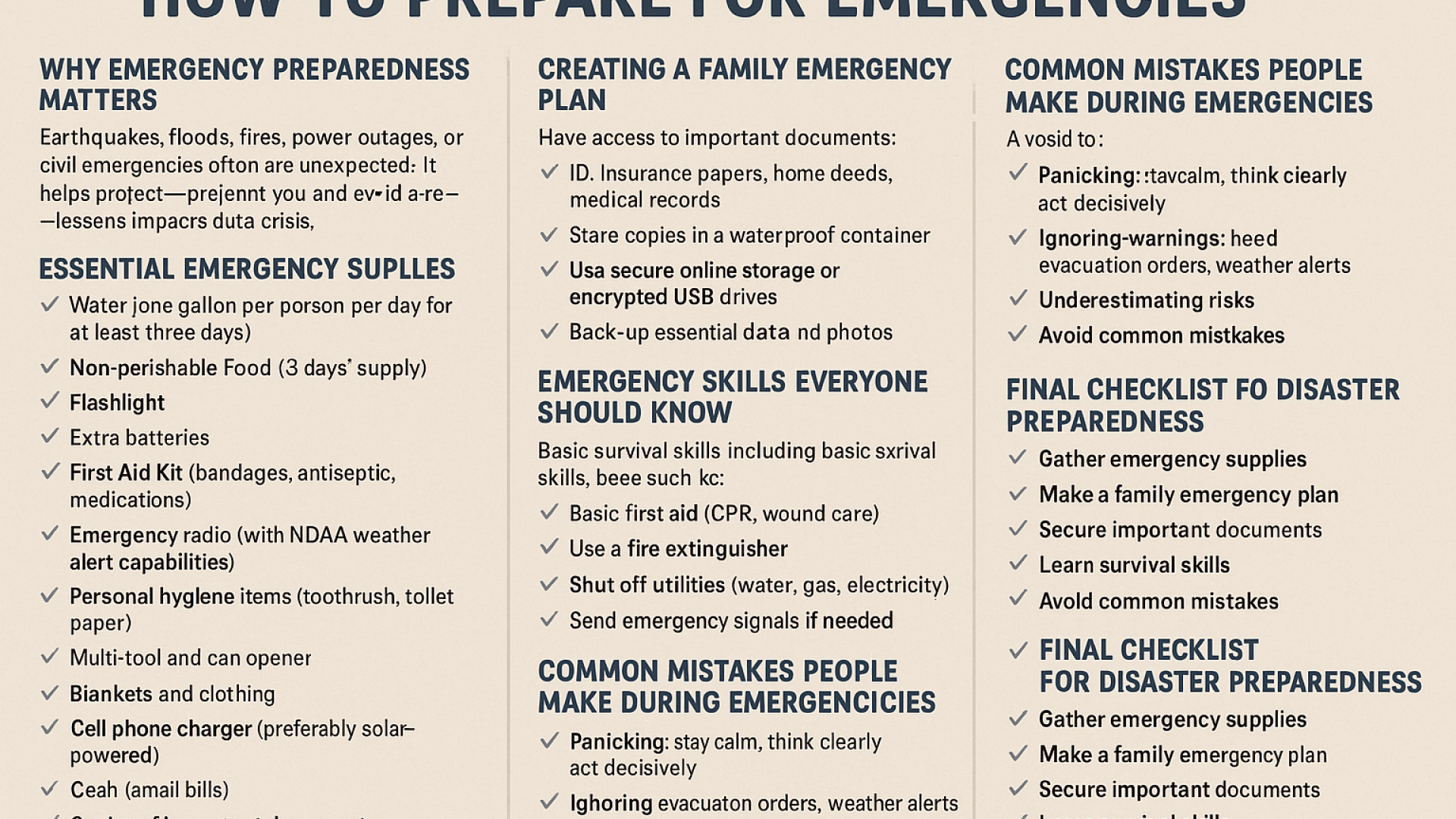
Emergencies and disasters can strike without warning, disrupting daily life and putting lives at risk. Whether it’s an earthquake, flood, fire, power outage, or civil unrest, being prepared can make the difference between safety and tragedy. Emergency preparedness is not just for first responders or government agencies; it is a responsibility for every individual and family. Preparing in advance helps reduce panic, ensures access to necessary resources, and improves the chances of survival and recovery.
Recent events, such as severe storms and natural disasters worldwide, highlight the importance of readiness. The unpredictability of these events means that waiting until a disaster occurs is too late. Taking proactive steps to prepare can protect your loved ones and provide peace of mind. Moreover, preparedness fosters resilience in communities, enabling faster recovery and reducing the overall impact of disasters.
Essential Emergency Supplies
Building a well-stocked emergency kit is a foundational step in preparedness. Your kit should contain items that cover basic survival needs: water, food, warmth, communication, and medical care. Here are the must-have supplies:
- Water: Store at least one gallon per person per day for a minimum of three days. Consider additional water for pets and sanitation. In hot climates or for individuals with special needs, increase the amount accordingly.
- Food: Non-perishable, easy-to-prepare items such as canned goods, energy bars, dried fruits, and nuts. Include a manual can opener. Rotate food supplies regularly to keep them fresh.
- Flashlight and Batteries: A reliable flashlight with extra batteries is essential for power outages. Consider LED flashlights for longer battery life and include headlamps for hands-free use.
- First Aid Kit: Include bandages, antiseptics, pain relievers, tweezers, scissors, and any prescription medications. Customize the kit based on your family’s health needs.
- Emergency Radio: A battery-powered or hand-crank radio to receive weather updates and emergency broadcasts. Some models also include USB charging ports for mobile devices.
- Multi-tool or Swiss Army Knife: Useful for various tasks and repairs, from opening cans to fixing equipment.
- Personal Hygiene Items: Moist towelettes, hand sanitizer, feminine hygiene products, and garbage bags to maintain cleanliness and prevent illness.
- Warm Clothing and Blankets: To maintain body heat in cold conditions. Include rain gear and sturdy shoes.
- Important Contact Information: Written list of emergency contacts, including family, doctors, and local emergency services. Store copies in your kit and on your phone.
- Cash: Small bills and coins, as ATMs and credit card machines may be unavailable during disasters.
Regularly check and update your supplies to ensure nothing is expired or damaged. Customize your kit based on your family’s specific needs, including infants, elderly members, or pets. Additionally, consider including items such as blankets, sleeping bags, and portable chargers to enhance comfort and connectivity during prolonged emergencies.
Creating a Family Emergency Plan
Having a clear, practiced plan is critical to effective emergency response. Families should discuss and agree on communication and evacuation strategies before a disaster occurs. A well-prepared plan reduces confusion and helps everyone stay calm and focused.
- Communication Plan: Designate an out-of-town contact person who can relay information between separated family members. Agree on how and when to check in, using text messages or social media if phone lines are overloaded.
- Meeting Places: Identify safe locations both near your home and outside your neighborhood where family members can reunite if separated. Ensure everyone knows the addresses and routes.
- Evacuation Routes: Know multiple routes out of your area in case primary roads are blocked. Practice these routes periodically and consider alternative transportation options.
- Special Needs Considerations: Plan for family members with disabilities, medical conditions, or pets. Prepare necessary medications, mobility aids, and pet supplies.
- Emergency Drills: Conduct regular drills to ensure everyone understands the plan and can act quickly under stress. Include scenarios such as fire, earthquake, and severe weather.
Document your plan and share copies with all family members. Keep a printed version in your emergency kit and accessible locations such as your car and workplace. Encourage open communication and update the plan as circumstances change.
Important Documents and Backup Plans
Securing vital documents is often overlooked but crucial. Losing identification, insurance papers, or medical records during a disaster can cause significant delays and complications. Having organized and accessible documents can expedite recovery and access to aid.
- Documents to Secure: Passports, driver’s licenses, birth certificates, insurance policies, medical records, property deeds, and financial information. Include pet vaccination records and prescriptions.
- Storage Methods: Use waterproof and fireproof containers or safes. Consider digital backups stored securely in encrypted cloud services or on USB drives kept in separate locations. Label containers clearly for quick identification.
- Access and Sharing: Ensure trusted family members know where to find these documents and how to access backups if needed. Provide instructions for digital access and passwords if applicable.
Regularly update your documents and backups to reflect any changes in your personal or financial situation. Review your insurance coverage to ensure it meets your current needs and understand the claims process.
Emergency Skills Everyone Should Know
Beyond supplies and plans, practical skills empower individuals to respond effectively during crises. Some essential skills include:
- Basic First Aid: Learn how to treat cuts, burns, fractures, and perform CPR. Many community centers and organizations offer certified courses. Knowing how to stop bleeding and perform the Heimlich maneuver can save lives.
- Fire Safety: Understand how to use a fire extinguisher, create fire escape routes, and practice stop-drop-and-roll techniques. Teach children these skills early.
- Communication Skills: Know how to use emergency radios, signal for help, and communicate clearly under stress. Learn basic hand signals and whistle codes.
- Water Purification: Techniques such as boiling, using purification tablets, or filtration systems to ensure safe drinking water. Understand how to identify safe water sources.
- Navigation: Basic map reading and compass use in case GPS is unavailable. Practice orienting yourself using natural landmarks.
- Food Preparation: How to safely prepare and store food without electricity. Learn to use camping stoves and preserve food through drying or canning.
Regularly refresh these skills and encourage family members to learn them as well. Consider joining local emergency preparedness groups or volunteering with organizations like the Red Cross to enhance your knowledge and community involvement.
Common Mistakes People Make During Emergencies
Understanding common pitfalls can help avoid unnecessary risks and complications:
- Panic and Poor Planning: Lack of preparation leads to panic, which impairs decision-making. Having a plan reduces anxiety and helps maintain control.
- Ignoring Warnings: Delaying evacuation or ignoring official alerts can be dangerous. Always heed warnings promptly and follow instructions from authorities.
- Overpacking or Underpacking: Carrying too much can slow you down, while missing essentials can leave you vulnerable. Balance is key; pack light but include critical items.
- Not Practicing the Plan: A plan is only effective if everyone knows it well. Regular drills are essential to build confidence and muscle memory.
- Failing to Secure Important Documents: Losing critical paperwork can delay recovery and access to aid. Keep documents protected and accessible.
- Relying Solely on Technology: Power outages and network failures are common during disasters. Have non-digital backups and communication methods such as printed maps and written contacts.
By being aware of these mistakes, you can take proactive steps to avoid them and improve your overall preparedness.
Final Checklist for Disaster Preparedness
Use this checklist to ensure you are ready for emergencies:
- Assemble and maintain an emergency supply kit with water, food, first aid, and tools.
- Create and practice a family emergency communication and evacuation plan.
- Secure important documents in waterproof and fireproof containers; maintain digital backups.
- Learn and refresh essential emergency skills like first aid and fire safety.
- Stay informed about local hazards and emergency alerts through reliable sources.
- Prepare your home by securing heavy furniture, checking smoke detectors, and knowing shut-off points for utilities such as gas, water, and electricity.
- Plan for special needs of family members and pets, including medications and supplies.
- Keep cash on hand and ensure vehicles have fuel and are maintained.
- Review and update your preparedness plan and supplies regularly, at least twice a year.
Being prepared is a continuous process that requires attention and commitment. By taking these practical steps, you can protect yourself and your loved ones, reduce the impact of disasters, and recover more quickly when emergencies occur. Remember, preparedness not only saves lives but also empowers you to face uncertainty with confidence and resilience.